

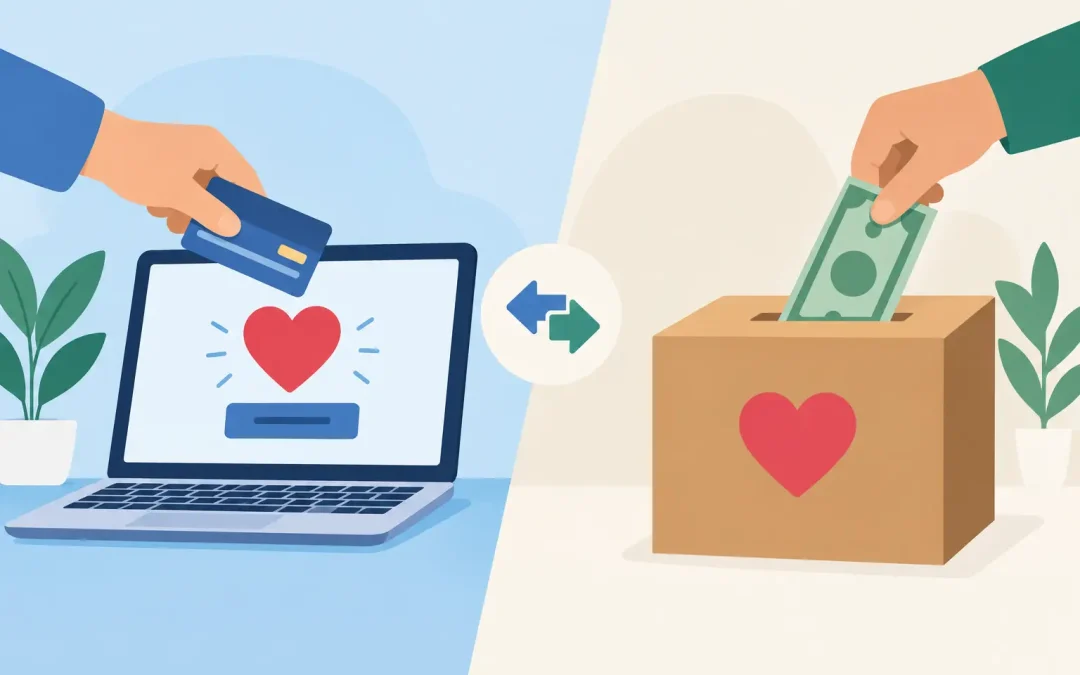
A paper order form can still come home with a student and turn into a strong sale at a family dinner. An online store can help a grandparent across the country support the same cause in two minutes. When organizers weigh online versus paper fundraising, the best answer is rarely about choosing the newest option. It is about choosing the selling method that gives your group the widest reach without creating more work for already-busy volunteers.
For schools, teams, music programs, churches, and community nonprofits, a fundraiser has to do more than look good. It has to produce meaningful profit, offer products people genuinely want, and give organizers a clear path from kickoff to delivery. Paper and online selling each bring real advantages. The strongest campaigns often use both with a plan.
Online Versus Paper Fundraising: The Real Difference
Paper fundraising is personal, visible, and familiar. Participants carry catalogs or order forms, talk directly with supporters, collect order details, and turn in their sales by a set deadline. It works especially well when participants regularly see relatives, neighbors, coworkers, and community members who enjoy buying familiar products to support a local group.
Online fundraising gives each participant a digital storefront or shareable campaign page. Supporters can shop from a phone, tablet, or computer, often without handling cash or tracking a paper form. A participant can send the campaign to family members who live out of town, post it in a community group, or share it with friends who want to help but may not see them in person.
The difference is not simply paper versus technology. Paper relies more heavily on face-to-face conversation. Online selling relies on quick sharing, clear product presentation, and repeated digital reminders. Both can be profitable. Both need a strong kickoff. And both perform better when participants understand exactly what the funds will help accomplish.
When Paper Fundraising Has the Edge
Paper order forms remain valuable because they create a natural reason to start a conversation. A player who asks a neighbor to support tournament travel, or a student who explains that sales will fund a music trip, gives the buyer a personal connection to the purchase. That connection matters.
Paper also works well for supporters who prefer cash, checks, or a catalog they can look through at their kitchen table. Not every supporter wants to enter payment details online, create an account, or shop from a small phone screen. For some communities, especially those built around local relationships, a printed brochure feels simple and trustworthy.
There is another practical benefit: a paper campaign gives participants a physical reminder of their responsibility. A catalog in a backpack or a handout at practice can prompt action in a way an email notification may not. Younger participants often need that visual cue, along with a clear goal and a firm turn-in date.
The trade-off is administration. Order forms must be legible, payments need to be collected and counted carefully, and organizers need a dependable process for compiling sales. A well-run product fundraiser reduces that burden with clearly labeled fulfillment and organized sorting, but paper campaigns still require attention to detail.
Where Online Fundraising Delivers More Reach
Online selling shines when your supporters are spread out. A school family may have grandparents in another state. A sports team may have former players, alumni, and friends who want to contribute from far away. A church or nonprofit may have supporters who cannot attend local events but still want to make a practical purchase for a good cause.
An online fundraiser expands the group each participant can reach beyond the people they see during the week. It also makes last-minute purchases easier. Supporters can buy after work, on a weekend, or after seeing a reminder in their inbox. That convenience can turn good intentions into completed orders.
For organizers, online tools can reduce several common headaches. Orders are entered directly by the buyer, payment is generally processed at checkout, and sales records are easier to track. That means less time deciphering handwriting, following up on missing payment, and manually adding totals.
Still, online campaigns are not automatic. A storefront does not sell itself just because the link exists. Participants need a simple sharing plan, and they need permission to make more than one ask. A launch message, a mid-campaign reminder, and a final-days post will usually outperform one message sent at the beginning.
Online fundraising can also leave behind supporters who are less comfortable shopping digitally. If your group goes online only, make sure there is a clear alternative for people who prefer to order in person.
Why a Hybrid Campaign Often Raises More
For many groups, the most profitable choice is not online versus paper fundraising as an either-or decision. It is a coordinated hybrid campaign that lets every participant sell in the way that fits their supporters.
Paper forms capture local, in-person sales. Online ordering reaches family and friends outside the immediate community. Together, they allow a participant to sell cookie dough to coworkers, popcorn to neighbors, and practical gifts or pantry products to relatives who live farther away. You are not asking supporters to change their preferred buying habits. You are giving them options.
A hybrid approach also protects the campaign from common obstacles. If weather cancels practices, online sharing can keep momentum going. If a supporter does not use social media, a paper brochure can still make the sale. If a participant forgets to bring an order form to school, their online page remains available.
At Ultimate Fundraising, this flexibility is central to making campaigns fast, easy, and profitable. The goal is not to give organizers another system to manage. It is to offer familiar, quality products and selling options that help more supporters say yes.
Choose the Format Based on Your Group’s Reality
Before selecting a campaign format, look closely at how your group operates. A small elementary school with highly engaged local families may see excellent results from paper catalogs supported by a basic online option. A competitive sports team with players from several communities may benefit more heavily from digital sharing. A church group with a broad age range may need both from the start.
Consider these four practical questions:
- Where do your participants already have relationships: in person, online, or both?
- Are your supporters mostly local, or are they spread across different cities and states?
- How much time can organizers realistically devote to collecting payments and entering orders?
- What product categories will your supporters be excited to buy for themselves, give as gifts, or keep on hand?
Product choice matters as much as format. A campaign built around recognizable, useful products gives participants an easier conversation. Popcorn, coffee, snacks, grocery cards, cookie dough, first aid kits, and pantry favorites feel less like a donation request and more like a purchase with a purpose. That is a better experience for supporters and a better path to repeat sales.
Set Up Your Campaign for Better Results
Whether you use paper, online, or both, a strong launch determines much of the outcome. Start with a specific financial target and explain what that money will do. “We need $8,000 for equipment” is more motivating than “Please support our fundraiser.” Families and participants should understand the goal, the campaign deadline, and the expected profit per sale.
Give participants a short, comfortable message they can use. They do not need a long sales script. A simple explanation of who they represent, what they are raising money for, and what products are available is enough. Confidence grows when participants know they are offering something worthwhile.
For online sharing, encourage participants to personalize their message rather than simply posting a link. A brief note about why band uniforms, a tournament, a school project, or a community program matters will get more attention than a generic announcement. Remind them to share again as the deadline approaches.
For paper orders, make turn-in instructions impossible to miss. State who collects forms, where payments go, which payment methods are accepted, and what happens if an order form is incomplete. Clear instructions prevent the final week from becoming a scramble.
Most of all, keep the campaign short enough to create urgency. A focused selling window gives families a reason to act now and makes it easier for organizers to maintain momentum. A fundraiser should feel organized, not endless.
Measure More Than Total Sales
Total revenue is the headline number, but it does not tell the whole story. Review how many participants sold, the average order size, which products moved fastest, and where orders came from. Did online sales bring in distant relatives? Did paper forms drive larger neighborhood orders? Did one class, squad, or volunteer group need more coaching than the others?
Those answers help you run a stronger fundraiser next time. They also help you choose the right product mix and selling format for your community instead of relying on assumptions. A campaign that earns strong profit with manageable effort is more sustainable than one that produces big sales but burns out every volunteer involved.
The best fundraiser meets supporters where they are, makes buying easy, and gives your group a result worth celebrating. Offer a personal paper option, a convenient online option, or both, then put your energy into a clear goal and products people are happy to bring home.